

The God of the Old Testament is arguably the most unpleasant character in all fiction: jealous and proud of it; a petty, unjust, unforgiving control-freak; a vindictive, bloodthirsty ethnic cleanser; a misogynistic, homophobic, racist, infanticidal, genocidal, filicidal, pestilential, megalomaniacal, sadomasochistic, capriciously malevolent bully.
— Richard Dawkins, The God DelusionGod is completely sovereign. God is infinite in wisdom. God is perfect in love. God in His love always wills what is best for us.
— Jerry Bridges
How is it that Christians and atheists can reach such strongly opposing conclusions about God’s benevolence?
It may come down to a simple matter of faith, but “evil” is also an ambiguous term, one that believers and non-believers tend to define differently. So in tackling this difficult question, let’s start by briefly examining how each side tends to define evil. We’ll then see if we can find any common ground, explore some of God’s allegedly “evil” deeds, and try to determine if God truly qualifies as evil.
(Note: there is also some debate over whether or not God confesses to doing evil. For now, we’ll focus on his actions, rather than this debatable confession.)
A Secular Definition of Evil
While secular definitions of evil may vary, evil tends to be measured using the tools of empathy and reason: the more pain and suffering caused, and the less purpose it serves, the more evil the perpetrator.
But for non-believers, the word “evil” does not carry the same cosmic, eternal, or religious connotations that it carries with believers. It is humans who ultimately decide what is evil, and these human judgments are often subjective (e.g. “One man’s terrorist is another man’s freedom fighter”).
But while the term “evil” may be subjective, suffering can be measured to some degree.
For example, it can be safely argued that being burned is objectively more painful than not being burned. Or the parent of a kidnapped child is going to be more emotionally distraught than one whose child is safe at home.
Suffering is objective enough that most civilizations can agree on which “evil” behaviors (those which create suffering) should be discouraged or outlawed. But evil is not always black and white.
A Christian Definition of Evil
For most Christians, the definition of evil stems from God alone. If God declares something evil, than this is an absolute and objective truth: it is a fact.
While this definition sounds simple enough in theory, it can be more difficult to employ in practice.
For example, is it evil to divorce one’s spouse and marry another? What about in cases of abuse?
Is it evil for one man to marry another man?
Is it evil to steal? In absolutely every case? What about to feed a starving child?
Is it evil to violate any Old Testament laws? Which ones, exactly?
If evil is an absolute and objective fact, it’s definition should be universally and inherently understood. We should all know good from evil just as we know light from dark, but rarely do all religions and denominations agree on what qualifies as evil.
There is also what is known as the “Euthyphro dilemma,” which questions where God gets his definitions. If God can arbitrarily decide what is good or evil, then even Satan could be a “good” God, by simply defining his works as “good.” But if this definition comes from outside God, then from whence does it come? Or if this definition is based on reason, then why not explain his reasoning?
In short, non-believers tend to define evil as subjectively defined by humans, while believers tend to define it as objectively defined by God, even if they can’t agree on a definition, or its source.
Finding Some Common Ground
Since we need to start somewhere, I would wager that both believers and non-believers would (at least) agree that we should try to treat others in ways we like to be treated (aka “the Golden Rule” or the “law of reciprocity”). Or conversely, we shouldn’t do things to others that we wouldn’t want done to ourselves.
“So whatever you wish that others would do to you, do also to them, for this is the Law and the Prophets.”
— Matthew 7:12
This simple statute is not only Biblical, it is also reasonable: you shouldn’t stab your neighbor in the face, because you wouldn’t want your neighbor to stab you in the face. Fair enough.
This idea is so reasonable that it appears in some form in just about every religion and ethical tradition!
Defining Evil
If believers and non-believers can agree on the Golden Rule, then hopefully they can also agree that violations of this rule constitute some form of evil. A violation of the Golden Rule not only goes against the teachings of Jesus, it’s also an affront to logic and reason.
Exceptions to the Rule
In some cases, we recognize that violations of the Golden Rule may be justified (i.e. not considered evil). This usually occurs when the violation is performed to prevent an even greater evil from occurring.
For example, you may be justified in stabbing your neighbor in the face, if your neighbor is in the process of killing you and your family. In this case (in part because your neighbor has already violated the golden rule), you may be justified in violating his face (assuming no less harmful means of apprehension were readily available).
But this is a slippery slope, because we can justify all sorts of evil by simply claiming it was done to prevent an even greater evil.
God, the Golden Rule, and Evil
Differences in opinions about God emerge whenever he does something that appears evil (i.e. something he probably wouldn’t want done to himself, if the situation were reversed).
Naturally, Christians will judge these ostensibly “evil” actions as either justified or a misunderstanding of scripture. They trust that whatever God does, he does it for good reasons. They have faith that God is good, that he knows all things, and that his actions will result in the most beneficial outcome possible (Romans 8:28).
Atheists lack this faith, and instead tend to judge God by his actions, not his intentions.
But the Bible does seem to push the limits of what might be reasonable and permissible under a good God, so let’s look at a few examples.
Can genocide be justified?
“‘Now go, attack the Amalekites and totally destroy all that belongs to them. Do not spare them; put to death men and women, children and infants, cattle and sheep, camels and donkeys.'”
— 1 Samuel 15:3
To non-believers, ordering the wholesale slaughter of men, women, children, infants, and animals is textbook evil. But for those who believe in God, they know that this genocide was ordered by God for good reasons… though I imagine this logic was probably lost on the Amalekites…
Israelites: “So you see, Amalekites, God wants you all dead… but for good reasons.”
Amalekites: “Okay, but can you at least spare the women and the children? What harm have they done?”
Israelites: “Well, your women might seduce our men into following other gods, so that’s a no-go. And your little ones… well… they’re not Hebrew, so… no can do.”
Amalekites: “But… if your men are so easily seduced by other gods, how confident can they be in their own God? And why would God give us so many healthy children, only to ask you to slay them? And the animals… they are neither Jew nor Amalekite! Is your God afraid that they too might seduce your men?”
Israelites: “Don’t try to trick us with reason! Were you there when God laid the earth’s foundations? I think not! God’s prophet has ordered us to kill everything in this area, and he knows what’s best for us. God is great! God is great! Aaahhhh!”
Amalekites: “Aaahhhh!”
Today, following these kinds of orders would require a tremendous amount of faith. You’d have to have faith that God exists, that he talks to prophets, that he’s talking to your prophet, and that he’s ordering evil… for good reasons. But what if any one of these proved to be false?
What if your priest or pastor ordered you to kill all the non-believers in your neighborhood, along with their children and pets? Would you trust this message was from God? Why was it okay yesterday, but not today? Hopefully you would ask yourself, “Is this man really speaking on God’s behalf? Would a good God really desire such a thing? And if God wants these people dead, why can’t he just smite them himself?”
Can torture be justified?
Would a good God ever order someone to be tortured?
“‘If a man marries both a woman and her mother, it is wicked. Both he and they must be burned in the fire, so that no wickedness will be among you.'”
— Lev. 20:14“‘If a priest’s daughter defiles herself by becoming a prostitute, she disgraces her father; she must be burned in the fire.'”
— Lev. 21:9About three months later Judah was told, “Your daughter-in-law Tamar is guilty of prostitution, and as a result she is now pregnant.” Judah said, “Bring her out and have her burned to death!”
— Gen. 38:24
Again, while non-believers would insist that burning pregnant women to death is always an unnecessary evil, the believer must concede that sometimes God needs pregnant women to be set on fire… for good reasons.
Today, if God were to order you to set your pregnant daughter aflame, you might want to ask yourself, “Would a good God really desire such a thing? Would God want to kill her unborn child? Why must she be tortured to death, and not just executed?”
Rejoicing in the violent death of infants?
Happy is the one who seizes your infants and dashes them against the rocks.
— Psalm 137:9
And once again, non-believers would probably insist that there is no excuse for infanticide. And even if you do have to kill an infant, to take pleasure in it is nothing short of sadism.
But believers understand that sometimes God needs children to have their head’s bashed in, and for their killers to enjoy it… for good reasons.
In this case, the reason was revenge. The Edomite’s had taken pleasure in the destruction of God’s temple, and in return, God gave his blessing to anyone who wanted to kill their children.
But if you were to go into Walmart today, and God were to say to you, “Grab that man’s daughter by the ankles, and rejoice as you bash her head in,” you might want to ask yourself, “Is this really something a good God would say?”
If you know that God loves you, you should never question a directive from Him. It will always be right and best. When He gives you a directive, you are not just to observe it, discuss it, or debate it. You are to obey it.
— Henry Blackaby
(Honestly, some people would be better off not listening to the voices in their head.)
Today, infanticide tends to be frowned upon in Christian circles, so they prefer to place their emphasis on the kinder, gentler God of the New Testament:
Jesus said, “Let the little children come to me, and do not hinder them, for the kingdom of heaven belongs to such as these.”
— Matt. 19:14
(Unless, of course, they are Edomite or Amalekite children. Because f**k those kids.)
Terrorist threats?
Recently, I read a story about a father in South Sudan who was forced by government soldiers to eat the body of his dead 5-year old daughter. (Seriously, what the f**k is wrong with people?) One would be hard-pressed to imagine a more heinous, demented, and evil thought than this. Surely nothing could be more evil, or come from a good God… right?
“‘If in spite of this you still do not listen to me but continue to be hostile toward me, then in my anger I will be hostile toward you, and I myself will punish you for your sins seven times over. You will eat the flesh of your sons and the flesh of your daughters.‘”
— Leviticus 26:27-29“I will make them eat the flesh of their sons and daughters…”
— Jeremiah 19:9
Most non-believers (and relationship experts) would agree that such terrorist threats are a big red flag in any relationship.
But Christians understand that sometimes, when you really love someone, it’s necessary to threaten them with the most horrific things imaginable… for good reasons.
After all, if God didn’t intimidate the Jews, his love may have gone unrequited. And clearly, the Jews should have loved God, because only a God of love would threaten you this way… right?
But should you one day find yourself gnawing on your son or daughter’s thigh, you might want to ask yourself, “If God wants us to love him… why can’t he just be a God worth loving?”
Shouldn’t a good God discourage this kind of behavior, rather than threatening people with it?
Hell?
Finally, there is also the subject of eternal damnation.
If the situation were reversed, and you were God and God were human (though you’d want to change his name, obviously, because that would get confusing), do you think God would want to be sentenced to eternal torment? I don’t imagine he’d fancy that. In fact, I bet he’d wonder why you created him at all, if hell was even a remote possibility.
Similarly, would you ever order God to be burned to death? Would you kill him as a child? Would you send floods upon him and watch him drown? Would you order the slaughter of his family? Would you threaten to make him eat his children if he refused to obey?
You probably would not do this, because you’re a civilized, empathetic, and reasonable individual. You recognize there is a line between justice and cruelty. You wouldn’t do these things to God, and God probably shouldn’t do them to you, or anyone, ever.
But could it be that all these evil things are done by God… for good reasons?
All for good reasons?
It’s easy to claim that God does these things for good reasons, because we can’t prove that these things did not prevent some even greater evil.
But not only is it difficult to imagine what the rationalization may have been for these things, there exists several logical contradictions that make this claim seem like an impossibility.
For example, if hell is eternal, how does eternal torment eventually work for good? Wouldn’t it be better not to create mankind?
Or why would God create Satan, knowing it would not result in a greater good?
The suffering of animals is another mystery. What greater evil is presently being thwarted by making animals to consume one another? Or by striking them with custom-made diseases?
It certainly doesn’t appear as if these things result in a greater good.
Could we even tell a good god from a bad one?
All of this raises another interesting question: if a good God can partake in genocide, infanticide, and terrorism, how can we tell the difference between a good God and a bad one?
What if we arrive in the afterlife, only to find that the “real” God didn’t inspire the Bible at all? What if the real God chose to remain silent, to see how humanity would conduct itself in the absence of information?
The real God might say:
“How could you call this God you created ‘good’? Would a ‘good’ God create humans just to drown them? Or order the slaughter of innocent children? Would a good God order pregnant women to be burned alive? Or order rape victims to marry their rapists? Would a good God sanction slavery? Or terrorize his followers with threats of eating their young? Would a good God subject innocent creatures to predation or disease? Or sentence his creation to eternal damnation? I ask you, if this is a good god, what is an evil one? I gave you a brain so that you could struggle with moral, ethical, and existential questions for yourselves, in hopes that you would eventually conclude that virtue is its own reward. Instead, you invent gods and do evil in their name, whilst insisting it is ‘good’!”
Today, religious extremists still use God’s name to justify many heinous moral atrocities. They step out in faith, suspending human empathy and judgement, in hopes that God exists, and that the evil he has ordered is for a just cause. But what if that’s not the case?
Religion is an insult to human dignity. With or without it you would have good people doing good things and evil people doing evil things. But for good people to do evil things, that takes religion.
— Steven Weinberg
The Good God Next Door
To give another analogy, imagine it is one day revealed to us that there are multiple universes, each one created and ruled over by a separate God, each with his own distinct temperament and style.
Imagine we also discover that, in the next universe over, their God chose to be more lenient and merciful with his creation. Instead of creating both good and evil people, he chose to only create those who would desire good, which resulted in an entirely different world.
This God also chose to create all animals as vegetarians, so that no one creature would ever have to die just to sustain another (for that would be cruel).
In this world, there was no disease, or natural disasters; there were no miscarriages or untimely deaths. The only trials that humans faced were in their relationships with others, and their own existential questions.
When people did sin, this God didn’t threaten them with eternal hellfire, or with having to eat their young, but rather he helped them to learn and grow from their experiences.
This God did not hide from his creation, and would sometimes appear in person and say things like, “What’s wrong, Sarah? This isn’t like you. I know, I created you! What’s been going on that has made you feel you needed to act out in this way?” This God didn’t just say he loved his creation, he actually showed it!
This God never ordered murder, because no one ever needed to be murdered. He never ordered genocides, because no peoples ever needed to be… genocided. Like any good parent, he loved and cherished his creation, but also gave them room to make mistakes so they could learn from the consequences.
As his people aged, this God chose to spare them from the indignities of failing health. At the end of their life, he gave them the option to live that life over again, or live in another time, or in another world, or to retire with him to heaven, or to simply disappear from existence.
If this scenario were true, how might you feel about the God of your Universe? How do you think the people in this neighboring universe would view your God?
“It’s God’s creation, so he can do whatever he pleases!”
One final defense that is often banded about is that, “It’s God’s creation, so he can do whatever he pleases!” But does that make it right?
Imagine your brilliant neighbor has built an intelligent humanoid life form. This is no ordinary robot, but a revolutionary creation — a thinking, feeling life form that looks and acts just like a human, but is an entirely new design (i.e. no DNA, no cells, etc.). Call it, the “iHuman.”
Imagine you walk out to your front porch one morning to find your neighbor in his yard, torturing his iHuman. He has got this poor creature stripped naked, and strapped down, and he proceeds to torture it in unspeakable ways.
You hear this poor creature wailing in pain — pain it was designed to feel. With terror in its eyes, it cries out to you for help. What is the correct response?
Do you stop your neighbor? Reasoning that your neighbor should not do such things to feeling beings, because he would not want them done to himself?
Or do you retreat back inside, reasoning that it’s his creation, so he can do whatever he wants with it?
Just because someone creates life, that does not give them the ethical right to mistreat it. If anything, it morally obligates them to care for it (for if one is not going to care for it, it is better that they not create it).
But… Jesus died for our sins!
I’m not implying that God’s character is completely evil. To the contrary, the Bible contains many teachings that are still relevant today (such as the Golden Rule). But if a man tortures children one week, and volunteers at a homeless shelter the next, he is still guilty of doing evil.
Conclusion
Christians have faith God’s intentions are good, even when his works appear evil. No matter how heinous the deed, God can do no evil. Any perceived evildoing is always (somehow) man’s fault, or a misunderstanding of scripture.
As a Christian, I was quick to overlook these deeds, and eager to gobble up any explanation that would whisk these problems away. Not because they were reasonable explanations, but because I needed to believe that God was good.
But it’s difficult to comprehend how these cruel actions could ever be faithfully reconciled with a good God. God orders things that appear to violate the Golden Rule, things that cannot logically result in a greater good. God even asks that his own followers avoid the appearance of evil, lest others get the wrong impression (1 Thessalonians 5:22). God seems to understand that appearing evil leads people to conclude you are evil, yet he does not refrain from appearing evil himself.
Isn’t it enough that God should ask us to have faith in a God we can’t see? Must he also demand we have faith that his evil works are good?
As stated earlier, if the situation were reversed, I can’t imagine doing these kinds of things to God. And if God’s “prophets” were to order me to do evil in the name of God, I would have great difficulty believing that these orders came from a good God.
If I were asked to imagine what a good God might look like, I would imagine one much like the God in the neighboring universe (above). One who always protects the innocent, not one who occasionally delights in killing them. One who abhors things like slavery, torture, and rape and takes a clear stand against them. One who doesn’t design animals that eat one another, or causes them to suffer indiscriminately. One who doesn’t create beings he knows will turn evil, or that he knows he will need to drown, or be cast into hell. One who loves and protects his followers, and doesn’t need to resort to threats of hell or filial cannibalism to inspire allegiance. I would imagine a God who avoids the appearance of evil, lest we be forced to draw the wrong conclusions… for good reasons.

 Since their discovery in 1665, microbes have been found living almost everywhere: from 36,000 feet below sea level in the
  And all this change results in a lot of diversity. On the
  It’s also amazing to consider how you and I, and all other living things, are made up of individual cells, most of which still share DNA and processes in common with other single-celled organisms. In fact, you and I start off not as humans, but as a microscopic organism, formed from the union of two cells (an ovum and a sperm). These cells unite to share genetic information, and then they divide, and continue dividing, until they form something greater than the sum of their parts. We are humans, but we are also a massive colony of cells, working together for mutual benefit.
 Our world soon became overrun with increasingly complex multi-cellular organisms, most of which were still microscopic. Take the humble
  From skin diseases to dwarfism, God considered any injury or imperfection “unclean,” regardless of whether or not it was contagious. God’s concerns reside with visible abnormalities, not with controlling the spread of pathogens.
 Sixth, both humans and animals enjoy being clean, and are naturally repulsed by things that have the appearance of sickness or disease (an instinct which, no doubt, helps us to remain healthy and select healthy mates). There’s nothing particularly insightful about wanting others to wash up after being sick, or after having an abnormal discharge. If a friend comes to your house covered in vomit, pus, and blood (“Rough night, mate?”), it doesn’t take a genius to figure out why you might want him to wash up.
 Ultimately, it would be next to impossible to prove that God didn’t create microbes, just as it would be nearly impossible to prove Varro’s gods didn’t create microbes (though Varro certainly seemed to be more aware of them!). So why bother raising the question?
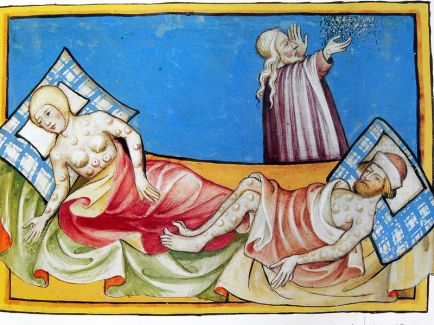 Instead of warning us, God chose to remain silent about the creation and purpose of harmful microbes, like those that cause cholera or tuberculosis. He doesn’t tell us why he created the Streptococcus pyogenes that cause strep throat, or Staphylococcus aureus, which causes staph infections. He doesn’t reveal why he created amoebas like Naegleria fowleri, which travel up the nostrils to feast on human brains, or Necrotizing fasciitis, which feasts on human flesh (for the love of God, don’t
  Had our world been created by a moral designer, we might expect evil actions to carry natural consequences, in much the same way that other actions carry negative consequences.

 was not designed specifically to remedy the problems associated with having a long neck. But by failing to mention these other animals, the creationist misleads his/her audience into believing the design is exclusive to the giraffe.


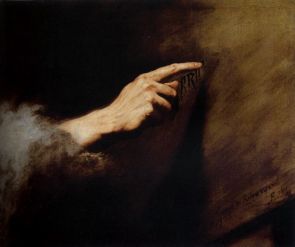 According to Daniel chapter 5, God wrote the words “mene, mene, tekel, parsin” on King Belshazzar’s palace wall. The prophet Daniel was (naturally) the only one who could translate the message, but the translation interests me far less than the fact
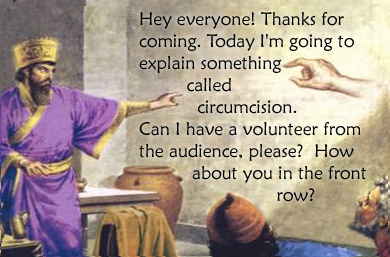 And if God wanted, he could’ve made his hand appear in every nation, delivering his word in every language.


 Creationists will often admit that they have a strong Biblical bias, and will try to rationalize it by saying, “Evolutionists are also biased by evolutionary teachings!” To some extent, this is true, everyone is biased. The question is, is the biased individual willing to change his mind with new evidence? And what evidence is his bias based upon?


 In an ironic twist, God now plays the role of the atheist. God does not believe in these gods, and recommends that you don’t either, not unless they can provide some pretty extraordinary evidence. God says, “If idols cannot present respectable evidence, then they are not to be believed. Let these gods predict the future, or tell us about the past, or do something amazing that fills us with fear and awe, that we may know they are real. If they can not do these things, then they are worthless, and those who believe in them are idiots.”
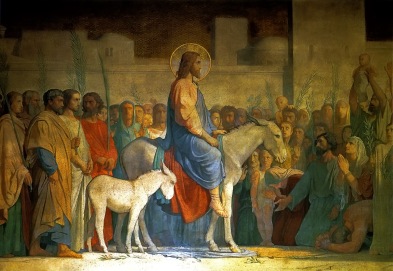 Some skeptics argue that Matthew misunderstood Zechariah’s prediction, and believed the messiah was to arrive on both a donkey and a colt, and so he wrote the fulfillment to match his incorrect interpretation. However, assuming Matthew’s account is true, I wouldn’t fault the other gospel writers for not mentioning the donkey, since it was technically irrelevant. (Though I would fault John for claiming it was Jesus who found the donkey, since the other gospels claim otherwise.)


 Once again, if we assume Cole is right, God has misled the Jews, who would’ve assumed God was going to encamp at the new temple and continuously protect it from that day forward. This is what the passage implies, and there was no reason for them to think that God would stop his protection and then restart it. What’s the point of God even encamping there if he’s not going to offer continuous protection?


 500 Questions about God & Christianity